What can you clean yourself, and what should you leave to a technician?
You can safely wash the filters and wipe the cover. Everything behind the filter needs professional aircon servicing every few months. DIY aircon cleaning is free, takes about ten minutes, and keeps airflow up between visits.
NEA’s household energy tips recommend inspecting aircon filters monthly and cleaning them when needed. Daikin’s maintenance guidance goes further and suggests every two weeks for units in regular use. One Singapore servicing firm, City Cooling Engineering, puts the saving at up to 10% on energy costs when filters stay clean.
Here is where the line sits.
| Task | DIY? | Why |
|---|---|---|
| Wash the filters | Yes | Easy, safe, no tools needed |
| Wipe the front cover and louvres | Yes | Damp cloth only, unit switched off |
| Clean the evaporator coil | No | Fins bend easily; needs the right cleaner and flushing |
| Clean the blower wheel | No | Hard to reach; needs partial dismantling |
| Flush the drain line | No | Needs a pump; poor flushing pushes dirt deeper |
| Check refrigerant pressure | No | Needs gauges and training |
| Check electrical parts | No | Safety risk |
How do you clean an aircon filter safely?
Switch the unit off, slide the filters out, rinse them, dry them fully, then refit. It takes six steps, and most HDB wall-mounted units follow the same pattern. If you want to clean your aircon filter yourself, this is how to clean an aircon filter without damaging anything.
- Switch off the unit with the remote, then at the isolator switch.
- Lift the front cover. Most wall-mounted units have a hinged panel that clicks up.
- Slide the filters out. They usually lift up and pull down. Do not force them.
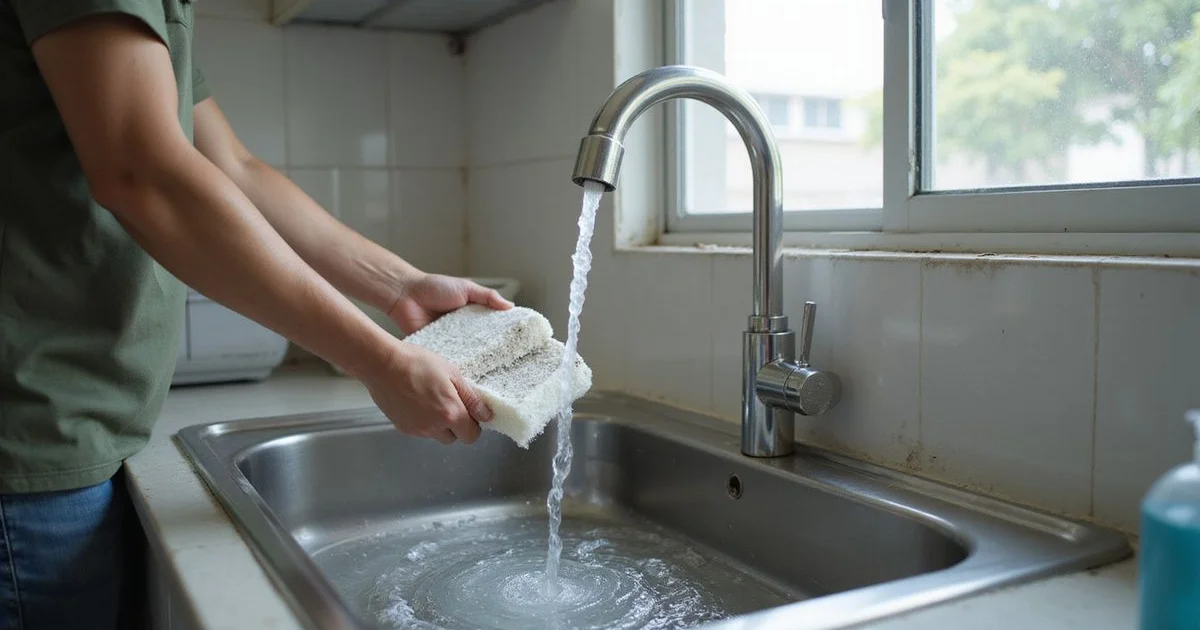
- Rinse under a tap. Run water from the back of the filter to push dust out the way it came in. A soft brush helps with stubborn dust. Use a little mild dish soap if the filter is greasy.
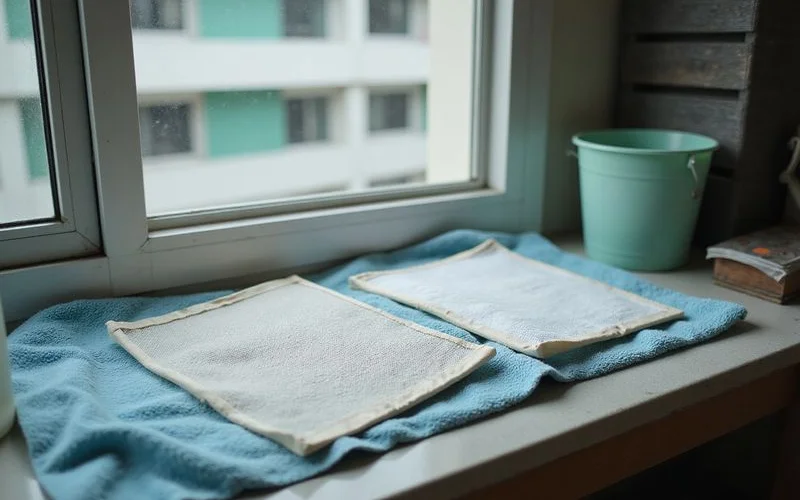
- Dry fully in the shade. Direct sun can warp the plastic frame. Damp filters grow mould once refitted.
- Refit and close. Make sure the filters sit flat and the cover clicks shut.
How often should you do it?
Every 2 to 4 weeks works for units used daily. A living room unit near an open kitchen collects grease and usually sits at the shorter end.
If the filter turns grey again within a week, the room is dusty. The unit probably needs servicing more often too.
Why do we advise against spray cleaners?
Canned coil cleaners cause more problems than they solve, because they loosen dirt without flushing it out. They promise a quick deep clean at home. In practice, we often see these four problems:
- Leaks. The foam loosens dirt from the coil, but there is nothing to flush it away. It washes into the drain pan and blocks the drain line. A few days later, the unit drips.
- Residue. Some sprays leave a sticky film that attracts dust faster.
- Electrical risk. Spray can drift onto the control board or wiring.
- Smell. Dirt that is loosened but not removed can make the smell worse.
A blocked drain is also more than a mess on your wall. NEA lists aircon drip trays among the places where Aedes mosquitoes can breed when water sits still. For a flat in Jurong West or Jurong East, a clear drain matters for dengue prevention as well as for your paintwork.
The leak after a DIY spray
One of the most common leak jobs we see starts with a can of coil cleaner. If your unit started dripping after a spray, book a drain line flush before the water damages the wall.
What does a technician do that you cannot?
A technician cleans and tests everything behind the filter, using tools and flushing methods that a home kit cannot match. That means the parts you cannot safely reach with a damp cloth.
General servicing
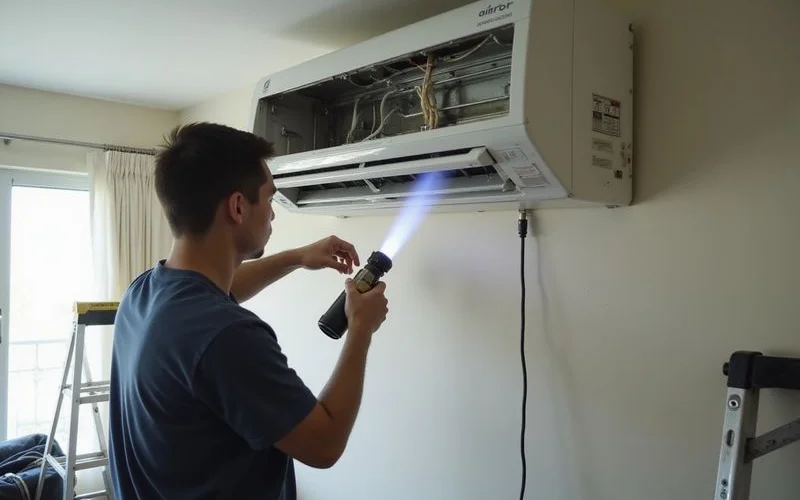
General servicing covers the evaporator coil, drain pan and drain line, refrigerant pressure, thermostat and electrical checks, and a final airflow and temperature test. It costs S$50 for 1 unit and S$70 for 3 units, with no callout fee in Jurong.
Most Singapore servicing guides suggest a visit roughly every three months for units run daily. This is the interval we also recommend for most flats.
Chemical wash
When even servicing is not enough, a chemical wash from S$80 per unit is the next step. It uses the right solution on the coil and blower, then flushes everything out through the drain, with a catch bag fitted.
That is the safe version of what spray cans try to do. One local guide, from aircons.sg, suggests considering a chemical wash about once every 12 to 18 months, or sooner if smells persist.
What are the signs DIY is no longer enough?
If cooling is still weak after you wash the filters, the problem sits deeper in the unit. Book a technician if, even with clean filters, you notice any of these:
- Cooling is still weak or slow
- A musty smell lingers at start-up
- Water drips from the unit
- You can see dark spots on the fins or blower
- It has been more than 4 months since the last service
Two or more of these at once usually points to a dirty coil or a partly blocked drain. Do not wait for the leak to start.
What is the best routine?
Clean the filters yourself every 2 to 4 weeks, and book servicing every 3 to 4 months. Our guide on how often to service your aircon explains how usage and room type change that interval.
Together, the two keep most units cooling well and stop small problems turning into repairs. If you have 2 to 4 units at home, wash all the filters on the same weekend so none gets forgotten.
Ready for the part you can’t do yourself? Book a service for your Jurong flat and we’ll take care of the coil, drain line and everything behind the filter.